Sponsoring an ICE event?
Promoting ICE?
Having a Fundraiser?
Special Event - Charity Walks, Runs, Staffed Info Booths?
Hard to Miss....
Here is an example ....Vancouver, BC has their community policing folks staffing the city's transit hub to distribute ICE Cards, Brochures and to answer questions about using ICE from commuters!
Showing posts with label Vancouver. Show all posts
Thursday, October 28, 2010
Saturday, September 11, 2010
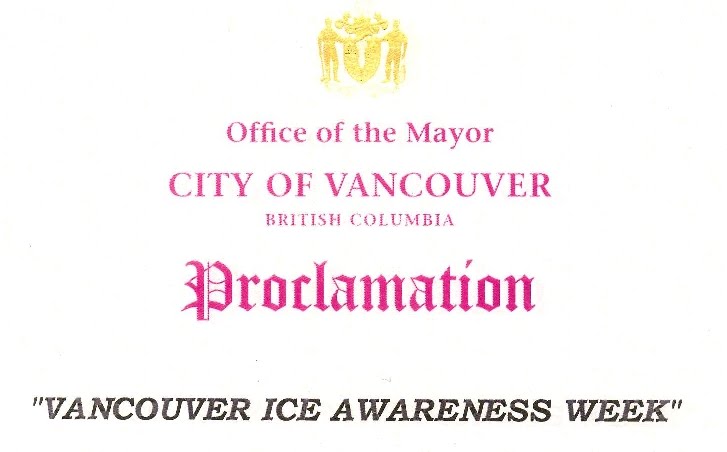
Vancouver Adopts ICE - Mayor Proclaims ICE Week September 9-15, 2010
News Release
City of Vancouver and emergency responders support ICE campaign for personal preparedness
September 9, 2010 - A simple card for a wallet or a backpack, or a cell phone contact entry, is a key tool for Vancouver first responders In Case of Emergency.
City of Vancouver and emergency responders support ICE campaign for personal preparedness
September 9, 2010 - A simple card for a wallet or a backpack, or a cell phone contact entry, is a key tool for Vancouver first responders In Case of Emergency.
The City of Vancouver today joined the Vancouver Community Policing Centres, the Vancouver Police Department (VPD), Vancouver Fire and Rescue Services and BC Ambulance Service to launch the ICE campaign to help first responders reach a person’s designated contact or translator if that person is unable to communicate.
“The City does a lot to prepare Vancouver for emergencies, and now there is another tool that people can use to prepare themselves,” said Mayor Gregor Robertson. “Vancouver is taking a leading role among Canadian cities to spearhead this important safety initiative and I encourage our citizens to take part."
"When every minute counts, because it could be your last, you would want your loved ones contacted immediately. Recording your ICE information makes that possible," says VPD Sergeant Ken Athans.
“Making contacts available using ICE not only helps us, but can help save lives,” says Captain Gabe Roder with the Vancouver Fire and Rescue Services. “With schools back in session, it’s a great way to protect your children.”
“BC Ambulance Service supports the ICE program as an easy and effective way to let paramedics and other emergency personnel know who to contact in an emergency,” says Superintendent Bob Alexander of the BC Ambulance Service.
ICE was developed in 2005 by a United Kingdom paramedic who found that most accident victims had cell phones, but first responders didn’t know which number to call if the patient was unable to communicate. The idea spread internationally and has been endorsed by cities such as New York and by the International Association of EMTS and Paramedics.
The ICE campaign was started to lessen the time it takes responders without clear contact information - an average of almost six hours in New York - to reach families following emergencies.
In a multicultural community like Vancouver, the ICE contact can be a translator who will assist the victim by providing information to first responders.
For young children, seniors and those without cell phones, business sized ICE cards are a valuable tool that can be carried in a wallet or backpack. Plans are to distribute the wallet cards to schools as well as agencies working with homeless people throughout Vancouver.
Thursday, September 9, 2010
Vancouver, BC Canada Adopts ICE - 2010
WELCOME VANCOUVER,BC CANADA!!
3 Million people to be introduced to ICE by the City of Vancouver!
Visit the City of Vancouver's Official Website http://www.vancouver.ca/
When is your City going to adopt ICE?
Official Press Release Here:City of Vancouver and emergency responders support
ICE Campaign for Personal Preparedness
A simple card for a wallet or a backpack, or a cell phone contact entry, is a key tool for Vancouver first responders In Case of Emergency.
The City of Vancouver today joined the Vancouver Community Policing Centres, the Vancouver Police Department (VPD), Vancouver Fire and Rescue Services and BC Ambulance Service to launch the ICE campaign to help first responders reach a person’s designated contact or translator if that person is unable to communicate.
The campaign promotes the internationally recognized acronym ICE, short for In Case of Emergency, as a name that can be programmed into a cell phone or found on a wallet card to assist first responders to find an appropriate contact. Over the past six months, the Vancouver Association of Community Policing Centres has spearheaded bringing the campaign to Vancouver.
“The City does a lot to prepare Vancouver for emergencies, and now there is another tool that people can use to prepare themselves,” said Mayor Gregor Robertson. “Vancouver is taking a leading role among Canadian cities to spearhead this important safety initiative and I encourage our citizens to take part."
"When every minute counts, because it could be your last, you would want your loved ones contacted immediately. Recording your ICE information makes that possible," says VPD Sergeant Ken Athans.
“Making contacts available using ICE not only helps us, but can help save lives,” says Captain Gabe Roder with the Vancouver Fire and Rescue Services. “With schools back in session, it’s a great way to protect your children.”
“BC Ambulance Service supports the ICE program as an easy and effective way to let paramedics and other emergency personnel know who to contact in an emergency,” says Superintendent Bob Alexander of the BC Ambulance Service.
ICE was developed in 2005 by a United Kingdom paramedic who found that most accident victims had cell phones, but first responders didn’t know which number to call if the patient was unable to communicate. The idea spread internationally and has been endorsed by cities such as New York and by the International Association of EMTS and Paramedics.
The ICE campaign was started to lessen the time it takes responders without clear contact information - an average of almost six hours in New York - to reach families following emergencies.
In a multicultural community like Vancouver, the ICE contact can be a translator who will assist the victim by providing information to first responders.
For young children, seniors and those without cell phones, business sized ICE cards are a valuable tool that can be carried in a wallet or backpack. Plans are to distribute the wallet cards to schools as well as agencies working with homeless people throughout Vancouver.
Subscribe to:
Posts (Atom)