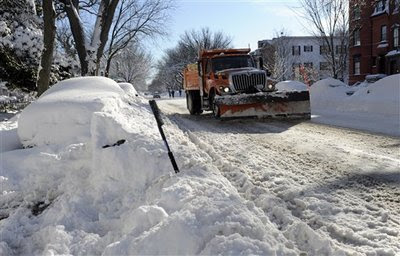
This year much of our country has experienced snow & ice in considerable quantity - including Florida.
Our nation’s capital was closed for several days as they were unprepared for driving in the deluge of snow. Maybe that was a good thing.....
Some safety organizations and government sources will advise you not to drive at all in bad weather which might seem reasonable in some instances - but certainly impractical in others.
Many people absolutely have to get somewhere for one logical reason or another. It makes sense therefore that you know how to drive in all conditions! Some folks who live/work in snow belt areas already be aware of this, but surprisingly many others still don't.
Here are some “Best Practice” Driving Tips:
· If you must drive in snowy conditions, make sure your car is mechanically sound and you have
secured preparations like a survival kit on-board and that you know how to adjust and drive
your vehicle in various road conditions. Snow tires will work far better than all-season tires.
· It's helpful to practice winter driving techniques in a snowy, open parking lot, so you're familiar
with how your car handles. (Police Agencies train officers how to drive in various emergency
conditions - so why shouldn’t you learn as well?)
· Some vehicle owner’s manuals contain tips on how to drive in adverse conditions specific to
your vehicle. Check there as well.
· Consider taking driving courses from professional driving schools that teach EVOC courses for
police/fire/ems if you really want to become proficient.
How to Drive Safely on Icy Roads
· Decrease your speed and leave yourself plenty of room to stop. You should allow at least three
times more space than usual between you and the car in front of you.
· Brake gently to avoid skidding. If your wheels start to lock up, ease off the brake.
· Turn on your lights to increase your visibility to other motorists.
· Keep your lights and windshield clean.
· Use low gears to keep traction, especially on hills.
· Don't use cruise control or overdrive on icy roads.
· Be especially careful on bridges, overpasses and infrequently traveled roads, which will freeze
first. Even at temperatures above freezing, if the conditions are wet, you might encounter ice in
shady areas or on exposed roadways like bridges.
· Don't pass snow plows and sanding trucks. The drivers have limited visibility, and you're likely
to find the road in front of them worse than the road behind. (They travel at 35MPH in NY)
· Don't assume your vehicle can handle all conditions. Even four-wheel and front-wheel drive
vehicles can encounter trouble on winter roads.
Handling a REAR Wheel Skid...
· Take your foot off the accelerator.
· Steer in the direction you want the front wheels to go. If your rear wheels are sliding left, steer
left. If they're sliding right, steer right.
· If your rear wheels start sliding the other way as you recover, ease the steering wheel toward
that side. You might have to steer left and right a few times to get your vehicle completely
under control.
· If you have standard brakes, pump them gently.
· If you have anti-lock brakes (ABS), do not pump the brakes. Apply steady pressure to the
brakes. You will feel the brakes pulse — this is normal.
Handling a FRONT Wheel Skid...
· Take your foot off the gas and shift to neutral, but don't try to steer immediately.
· As the wheels skid sideways, they will slow the vehicle and traction will return. As it does, steer in the direction you want to go. Then put the transmission in "drive" or release the clutch, and accelerate gently.
If You Get Stuck...
· Do not spin your wheels. This will only dig you in deeper.
· Turn your wheels from side to side a few times to push snow out of the way.
· Use a light touch on the gas, to ease your car out.
· Use a shovel to clear snow away from the wheels and the underside of the car.
· Pour sand, cat litter, gravel or salt in the path of the wheels, to help get traction.
· Try rocking the vehicle. (Check your owner's manual first — it can damage the transmission on
some vehicles.) Shift from forward to reverse, and back again. Each time you're in gear, give a
light touch on the gas until the vehicle gets going.
· Carry an emergency “Rescue Strap” in your vehicle – it is designed to pull your vehicle out of
the snow /mud/ditch - make sure you do not use a “Tow Strap” which is only designed for
towing.
Adapted and Supplemented from National Safety Council; New York State Department of Motor Vehicles; Washington State Government Information & Services


